
AI Voice Agents in 2025: Powering the Next Generation of Customer Experience

The world of business communication is undergoing a seismic shift. While companies once relied on traditional phone systems and scripted customer service representatives, 2025 has ushered in an era where artificial intelligence handles conversations with remarkable human-like fluency. AI voice agents are no longer futuristic concepts—they are active, transformative technologies reshaping how organizations engage with customers across every industry.
This transformation represents more than technological advancement; it signals a fundamental reimagining of customer experience, operational efficiency, and business scalability. Companies that embrace this shift are discovering unprecedented opportunities to serve customers better while dramatically reducing costs and complexity.
The Explosion of Conversational AI
The numbers tell a compelling story. According to Grand View Research, the global AI voice and virtual agent market is projected to explode from $3.5 billion in 2023 to over $21.7 billion by 2030—representing an extraordinary 44.9% compound annual growth rate. This isn't gradual adoption; it's a technological revolution unfolding in real-time.
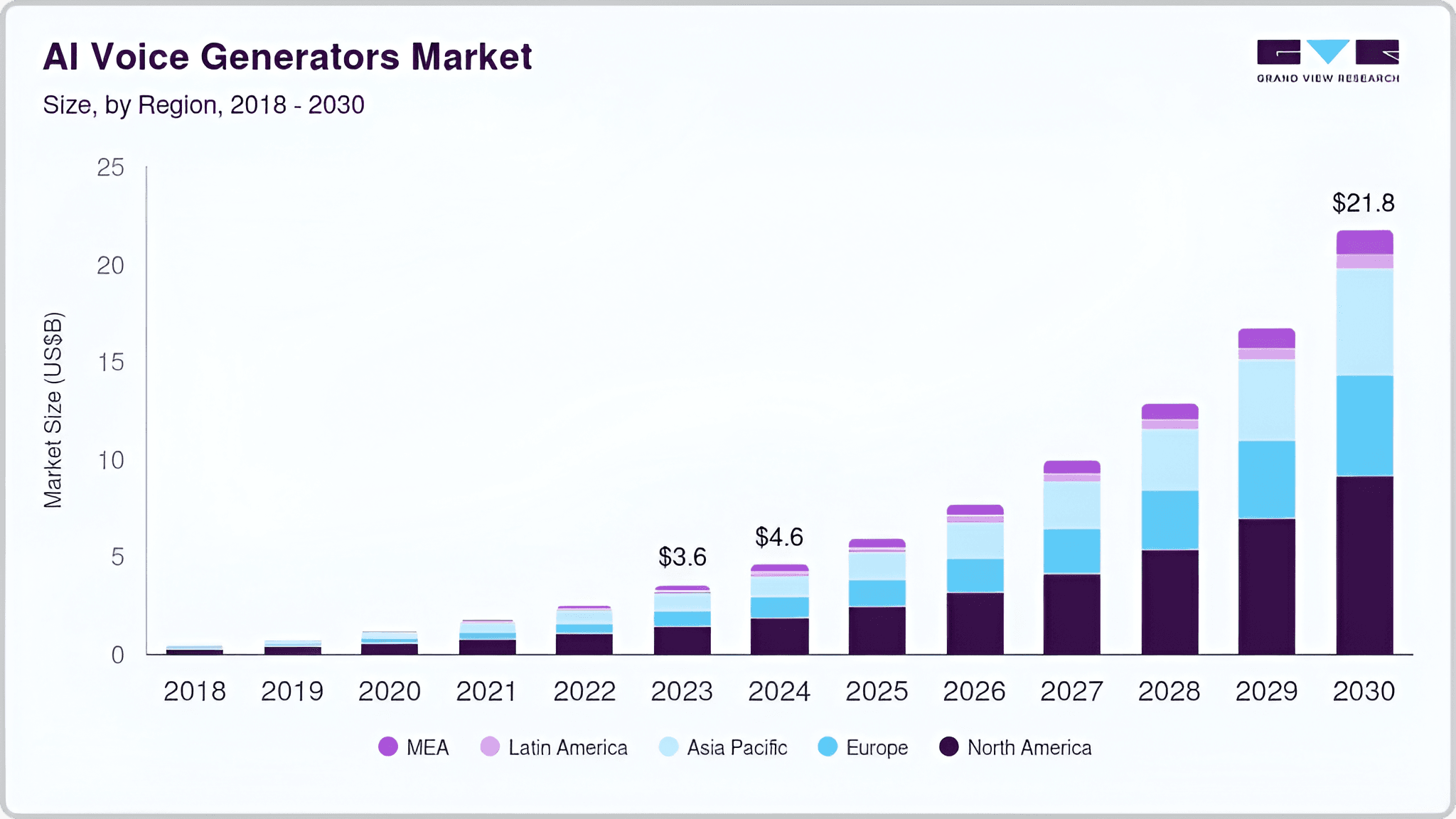 Estimated Global AI Voice Generators Market Size - Report by Grand View Research
What makes this growth even more remarkable is its breadth. Enterprise adoption has reached a critical mass, with over 85% of organizations now incorporating AI into their core operations. Among these forward-thinking companies, 80% have specifically deployed AI agents for customer service functions. The recent State of Voice AI report by Deepgram reveals that 67% of organizations now consider voice AI foundational to their customer strategy—a dramatic shift from just two years ago when voice technology was considered experimental.
The driving forces behind this surge are clear. Modern consumers expect instant, accurate responses regardless of the time of day or complexity of their inquiry. Traditional phone systems with their maze-like menu options and lengthy hold times feel antiquated in an age of instant digital gratification. Simultaneously, businesses face mounting pressure to deliver exceptional service while controlling operational costs and scaling efficiently.
Beyond Traditional Call Centers: What AI Voice Agents Really Do
AI voice agents represent a quantum leap beyond the rigid, menu-driven phone systems of the past. These sophisticated platforms leverage advanced speech recognition, natural language understanding, and state-of-the-art neural text-to-speech synthesis to create genuinely conversational experiences. Unlike traditional automated systems that rely on keyword recognition and scripted responses, modern AI agents understand context, intent, and nuance.

The technology stack powering these agents includes transformer-based language models similar to those behind ChatGPT, combined with real-time speech processing capabilities. Platforms like LiveKit provide the infrastructure for low-latency audio streaming, while companies like OpenAI, ElevenLabs, and Deepgram supply the AI models that enable human-like conversation. The result is an agent that can engage in multi-turn conversations, handle interruptions naturally, and adapt its responses based on the caller's emotional state and specific needs.
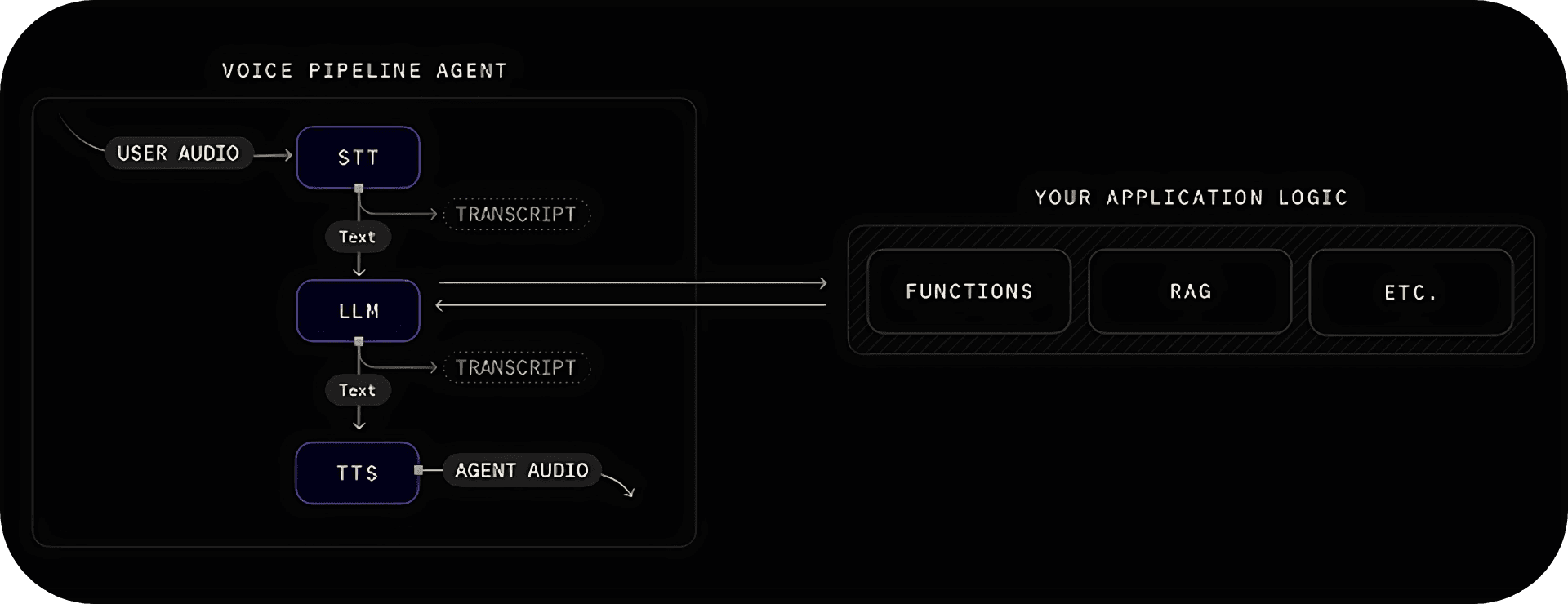 Livekit’s Voice Pipeline Agent Conversation Flow
Perhaps most importantly, these agents integrate seamlessly with existing business systems. They can access customer relationship management platforms, update electronic health records, schedule appointments in real-time, and trigger automated workflows—all while maintaining natural conversation flow. This integration transforms voice agents from simple information providers into active participants in business processes.
Transforming Industries Through Intelligent Automation
The impact of AI voice agents extends far beyond customer service departments. In healthcare, these systems are revolutionizing patient engagement by handling appointment scheduling, conducting preliminary symptom assessments, and managing routine follow-ups. According to recent industry reports, healthcare organizations deploying AI voice agents have seen 28% fewer no-shows and significantly improved patient satisfaction scores.
Real estate professionals are leveraging voice agents to capture and qualify leads around the clock. These systems can provide detailed property information, schedule viewings, and even conduct preliminary buyer qualification—ensuring that no potential client goes unserved, regardless of when they call. The results speak for themselves: companies using AI voice agents for lead management report conversion rate increases of 30-40%.
The financial services sector has embraced voice agents for their ability to handle sensitive information securely while providing instant account access and transaction support. These systems excel at fraud detection, loan pre-qualification, and routine account inquiries—all while maintaining strict compliance with financial regulations.
Retail and hospitality businesses are discovering that AI voice agents can handle everything from order taking to customer support with remarkable efficiency. Hotels use these systems for automated check-in processes, room service requests, and concierge services, while restaurants deploy them for reservation management and order processing.
The Economics of AI Voice Automation
The financial case for AI voice agents is compelling. Organizations implementing these systems typically see operational cost reductions of up to 60%, with some reporting even greater savings. These reductions come from several sources: fewer staff needed for routine inquiries, no missed calls during off-hours, and the ability to handle multiple conversations simultaneously without compromising quality.
The efficiency gains are equally impressive. AI voice agents resolve up to 95% of routine customer interactions on the first call—a stark contrast to traditional systems that often require multiple touchpoints or escalations. Resolution times decrease by as much as 87%, while human staff productivity increases by 50% as they focus on complex, high-value interactions instead of repetitive tasks.
These systems also create new revenue opportunities beyond cost savings. Round-the-clock availability allows businesses to capture leads and serve customers across different time zones without additional staffing costs. The consistency and professionalism of AI agents boost customer satisfaction and retention, with businesses reporting 2.4 times higher customer loyalty among those using automated voice systems.
Advanced Capabilities Defining the 2025 Landscape
The AI voice agents of 2025 possess capabilities that seemed impossible just a few years ago. Emotional intelligence stands out as perhaps the most significant advancement. These systems can detect frustration, excitement, urgency, or confusion in a caller's voice and adjust their responses accordingly. If a customer seems stressed, the agent might adopt a calmer, more reassuring tone. If someone is excited about a product, it can match that enthusiasm while providing relevant information.
Real-time personalization has reached new heights. AI agents can recognize returning customers, access their history and preferences, and tailor conversations accordingly. They seamlessly switch between languages and dialects within the same call, making them invaluable for businesses serving diverse populations.
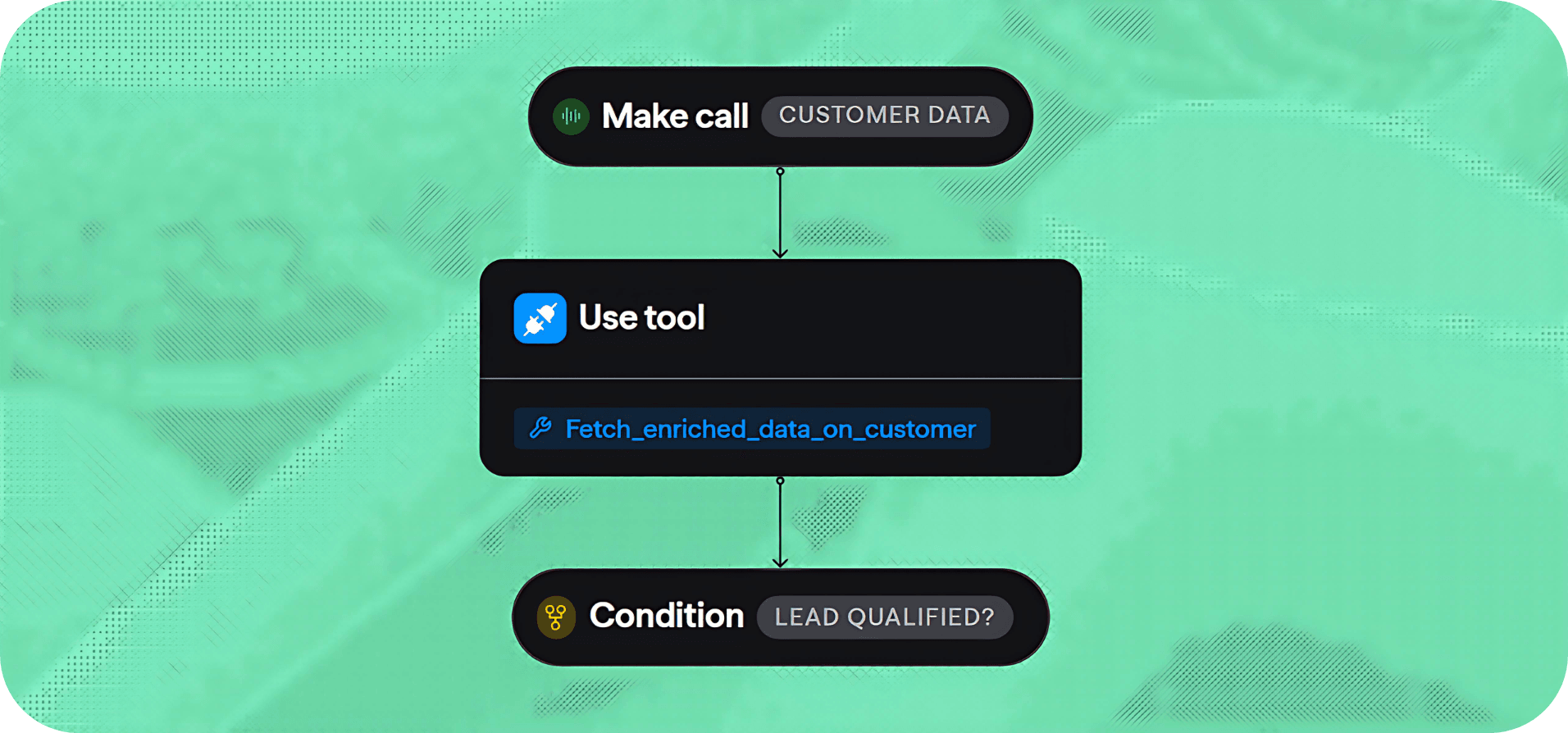 AI Voice Agents making personalized Outbound calls to Customer’s for Lead Qualification
Modern AI voice platforms offer exceptional integration capabilities. These systems seamlessly connect with:
- Customer relationship management systems like Salesforce and HubSpot
- Electronic health record platforms in healthcare settings
- Booking and scheduling systems across service industries
- Inventory management systems for retail operations
- Financial platforms for secure payment processing and account management
This integration happens in real-time, meaning every conversation automatically updates relevant business systems without human intervention.
Privacy, Compliance, and Trust
As AI voice agents handle increasingly sensitive interactions, privacy and compliance have become paramount concerns. Leading platforms now offer built-in compliance tools for major regulations including GDPR, HIPAA, and SOC 2. These systems can automatically redact sensitive information, maintain detailed audit trails, and ensure data handling meets industry-specific requirements.
The technology has evolved to address concerns about AI-generated content and deepfakes. Modern platforms include watermarking and detection capabilities to ensure transparency about AI-generated interactions when required by regulation or company policy.
Looking Ahead: The Future of Conversational AI
The trajectory for AI voice agents points toward even greater sophistication and integration. Multi-modal capabilities are emerging, allowing agents to process voice, text, and visual information simultaneously. Advanced interruptibility features are making conversations even more natural, allowing for the kind of rapid back-and-forth exchange that characterizes human conversation.
According to industry forecasts, 80% of routine customer service tasks will be handled exclusively by AI agents by 2029. This doesn't necessarily mean fewer human jobs, but rather a fundamental shift in how customer service teams operate. Human agents will focus on complex problem-solving, relationship building, and strategic customer engagement, while AI handles the volume of routine interactions.
The democratization of this technology is equally significant. What once required substantial technical expertise and infrastructure investment is becoming accessible to businesses of all sizes through cloud-based platforms and no-code deployment tools.
The Strategic Imperative
For businesses evaluating AI voice agents, the question is no longer whether to adopt this technology, but how quickly they can implement it effectively. Companies that delay risk falling behind competitors who are already delivering superior customer experiences at lower costs.
The most successful implementations start with clear objectives and realistic expectations. Organizations should identify specific use cases where AI voice agents can deliver immediate value—whether that's handling after-hours inquiries, managing appointment scheduling, or providing product information. From there, capabilities can expand as teams become more comfortable with the technology and identify additional opportunities.
The transformation of customer communication through AI voice agents represents one of the most significant business technology shifts in decades. Organizations that embrace this change position themselves not just for immediate operational benefits, but for long-term competitive advantage in an increasingly automated world.
As we move through 2025 and beyond, AI voice agents will continue evolving from helpful tools to essential business infrastructure. The companies that recognize and act on this shift today will be the ones defining tomorrow's standards for customer experience and operational excellence.